Showing posts with label Magma. Show all posts

Thursday, 30 June 2022

Just arrived


A couple of years ago, I reviewed Robert Selby's The Coming Down Time for Magma. To cut a long story short, I absolutely loved it.

So, I'm really looking forward to the above, a collection centred around the Civil Wars. Collisions between poetry and history are very much my thing anyway, and the 17th century is a particular interest of mine.

More to follow when I've had a chance to digest it, but fair to say that first impressions are very good.

Wednesday, 23 March 2022

Coming soon...


Last year, I reviewed Robert Selby's The Coming-Down Time (Shoestring Press) for Magma. I loved it – it was pretty much my favourite collection of the year – combining as it did the highly personal with the historical and the subtly political by way of close attention to family history.

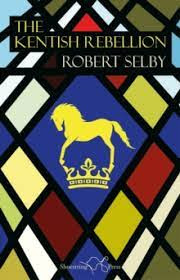
He has a new collection, The Kentish Rebellion, forthcoming from Shoestring in July, and will be reading poems from it at the Poetry London launch this week – you can find full details here.


Sunday, 28 March 2021

Magma 79


I received my copy of Magma 79 yesterday, and as always there's a really good mixture of poetry (including poems from the latest Magma Open Pamphlet Competition), articles and reviews. I haven't had chance to read much of it yet, and have to admit I went straight to two poets I always enjoy – Tony Williams and David Morley – but I look forward to having a longer read tonight.

It also includes my own reviews of collections by Robert Selby, Katrina Naomi and Robert Alan Jamieson. I won't tell you here what I thought about them, other than that they all had something to recommend them - you'll need to read Magma to find out more. 

Tuesday, 29 October 2019

Magma 75: Loss


I received the new issue of Magma in the post today – No75, themed around Loss. It contains my poem Grail Birds, which was partly inspired by Tim Gallagher's fascinating book The Grail Bird, and partly by the loss of my father a year ago this Friday. 

As always, it's packed with poems, reviews and articles, and I look forward to reading it over the next few days. I'll try to pick out some highlights on here when I do.


Tuesday, 6 November 2018

Magma 72 reviews

In the new issue of Magma (No.72), I've reviewed new collections from Bobby Parker and Stav Poleg, and an anthology in celebration of WS Graham. I won't give away what I thought of them – you'll have to buy the magazine for that. It contains a lot of fine poetry, much of it around the theme of climate-change.

Thursday, 25 August 2016

Magma 65

Issue 65 of the always excellent Magma is out now - you can find further details here.

Reviews include Kathryn Gray on Ian Duhig, Andy Willoughby and Claire Askew; Ian McEwen on Martin Stannard, Matthew Caley and Barbara Cumbers; Rob A Mackenzie on Judy Brown, Lisa Matthews and Adam Crothers; and Pippa Little on Anne-Marie Fyfe, Martin Figura and Andrew Shields.

Tuesday, 7 January 2014

The Elephant Tests reviewed at the Magma blog

There's a lovely review of The Elephant Tests by Katherine Stansfield over at the Magma blog. To be honest, I'm always delighted to get any kind of review, what with all publicity being good publicity and so on, but it's even better when the reviewer makes you think about your own work in a different way, and this one does exactly that (as Roy Marshall's in Hinterland did).

As I mentioned then, you can buy the collection through Nine Arches and Inpress by clicking here.

Wednesday, 26 June 2013

Magma launch reading

Next Monday (July 1st) sees the launch reading for Magma 56, edited by Helen Mort and Julia Bird. The featured readers are David Morley and Jack Underwood, and as usual the evening also includes short readings from many of the other poets featured in this issue (myself included). As always, it's held at The Troubadour, Earl's Court. It's been a long while since I've been to one, and even longer since I featured in the magazine, so I'm looking forward to it a lot. And if any friends fancy meeting in London beforehand for a drink and a poetry chat, drop me a line.

Wednesday, 15 May 2013

Some recent reading

Browsing through my blogs list this week, I enjoyed reading this post on Andrew Shields' always excellent blog. It helps that You Are The Everything is just about my favourite REM song, too.

Meanwhile, over at the Magma blog, there's Andrew Philip's thoughtful review of John F Deane's Snow Falling On Chestnut Hill. I've seen plenty of online debate recently about what a poetry review should do - this one makes me want to read more of the poetry in question, and to find out more about the poet. That's what I'm looking for, really.

Thursday, 18 October 2012

Jon Stone on cynicism

Excellent piece by Jon Stone here over at the Magma blog - I find myself agreeing with much of what he's written, although I suspect the comments thread might be a busy one.

Friday, 22 June 2012

Poetry reviewing

It's not often I find my way over to Facebook these days, but I have been following an interesting discussion on Rob Mackenzie's wall this week, about the way that poetry is reviewed in this country.

It's a complex subject, and to a large extent I find myself agreeing with the thrust of Jon Stone's argument (why can't poetry be reviewed in the same way that, say, film and music are?), as well as feeling a good deal of sympathy for Rob's starting-point.

I suppose one of the angles that hasn't been explored fully is where the reviews are appearing. I've no idea what The Guardian (or any of the other broadsheets) pay their reviewers, but I'd assume they do, and that would inevitably create a different situation to that of reviewers writing for a small press mag for no financial reward. While it might on the one hand make it easier for the reviewer to be critical (not having to worry about offending a potentially large proportion of the magazine's subscribers), it might also work the other way - the paper would be reluctant to consistently be too lukewarm towards the books of a regular advertiser.

In poetry mags and webzines themselves, it's a bit different. The reviewer is often writing for no reward other than a free copy of the book (although some, such as Magma, certainly pay). From personal experience, that's fine - it's a chance to read more poetry than I could otherwise afford, and especially to take a chance on books that I'd otherwise have thought looked interesting but didn't feel like shelling out for. It does mean, though, that the reviewer is often predisposed to like what they're reading - you're unlikely to take the time and effort to read the book carefully, make notes, then write the review, if it's something you just don't like.

The same's true on blogs, and that's certainly unashamedly the case here at Polyolbion. I don't get the time or the money to read anything like all the poetry I'd like to, so I'm not going to waste precious time writing a negative blog review when I could be just getting on with finding something I do like. I don't get enough time to be positive about all the things I do like, for that matter, so a great many good books go unheralded.

Finally, someone in the discussion brought up the subject of what a review is actually for. I haven't ever, I don't think, bought a book of poetry purely on the strength of a review, but a good review (as in a well written one) is often enough to spark my interest in a book that might otherwise have passed me by - again, it might well encourage me to take a few chances.

So what is a good review? Well, as Rob originally suggested, I want to see some suggestion of weak points, as well as strengths (and I can't think of a single collection I own that doesn't have at least some negatives), and I want to see both highlighted with plenty of reference to the actual text. In that, at least, I suppose it's always going to be different to any print review of film or music, where examples can only be described.


Wednesday, 23 May 2012

Catching up

I've been out of circulation for a few days, so I'm just going over a few things I missed, and that you might have, too.

Monday night's Shindig at The Western, in Leicester, featured the launch of C J Allen's new Nine Arches Press collection, At The Oblivion Tea-Rooms. There's a sample poem from it here at Litterbug (and the New and Selected from Leafe Press that's mentioned there comes highly recommended, too).

Meanwhile, at the HappenStance blog, Helena Nelson has some very interesting things to say about selling books through Amazon. I try to buy direct from presses where I can, or at readings, but I have taken the lazy way out at times.

Finally, my review of Carcanet's An Andrew Crozier Reader is at the Magma blog now - it's a book I reccomend highly.


Saturday, 25 June 2011

Catching up

Thursday night saw the launch of Birdbook 1 at the Phoenix Artists' Club, in London. It was great to be able to be there (and reminded me that I really ought to get down to more London events), and to catch up with the likes of Jo Bell, Simon Barraclough, Roddy Lumsden, Derek Adams, and, of course, Jon Stone and Kirsten Irving, the poetry dynamos behind Sidekick Books.

I really enjoyed the readings, especially as the accompanying art was projected behind the stage. There's so much good stuff in the book that it's hard to pick out favourites, but some of the poems that kept coming back to me later included Great Tit, by Emily Hasler, Green Woodpecker, by James Wilkes, and Edward Mackay's Tacc Tacc, Blackcap. Also, several of the poems that took more oblique approaches to the birds - Chrissy Williams' Redstart, Simon Barraclough's Pied Flycatcher, and Roddy Lumsden's Daredevil (which manages to connect Scottish Crossbills and Evel Knievel). Anyway, there's a lot of high-quality poetry and art in there, so buy a copy.

In other poetry news, I was delighted to see that Kona Macphee won the Geoffrey Faber Memorial Prize with her collection Perfect Blue. I've mentioned before that it was one of my favourite collections of last year.

Finally, there's a lovely review of hydrodaktulopsychicharmonica by Julia Bird in issue 50 of Magma, along with David Morley on Romani poetry, some Magma memories from previous contributors, and poetry from the likes of Tim Turnbull, Helen Ivory, Penelope Shuttle, AB Jackson and Michelle McGrane. 

Thursday, 9 June 2011

An interview with David Briggs


One of my favourite poetry collections of 2010 was David Briggs’ debut The Method Men, from Salt. I was lucky enough to review it for Magma 48, in which I ended by saying that it was a book that gave the impression of the arrival of a poet almost fully formed.

Re-reading it recently has only confirmed those early impressions for me, so it was a pleasure to be able to interview David about the book, and to post a couple of poems from the collection, as part of his Method and Madness virtual tour.

MM: One of the things I enjoyed most about The Method Men was the use of folklore (and maybe invented folklore) to set up a way of looking at the world more generally. Has this been a long-term concern in your poetry?

David Briggs: Yes, I think it’s been there throughout. My English degree included a large dose of Old and Middle English lit., and I’d been a folksy singer-songwriter before I turned to writing poetry, so there are some influences from those two strands.

As I see it, folklore provides narratives and methods for dealing with the world that are typically oppositional to the dominant institutional narratives of how we should live, or of what events in our lives mean. Often, they’re entirely irrational – superstitions, divinatory practices, etc. – yet, they’re also strangely potent, especially in providing signs and symbols, and have served cultures (for good and ill) across the world for aeons. If I can explain my terrible day in terms of having seen one magpie on the way to work that morning, rather than in terms of complex institutional and economic forces I’m powerless to change, I may be throwing in my lot with the chaotic forces of chance (and irrationality), but I might see two magpies tomorrow morning, and that might put a spring in my step that causes me to have what I regard as a much better day. That may be a silly example, but I’m convinced a similar (if more complex form) of folkloric irrationality is at work in us all the time, to varying extents, even in a scientific age. Folklore has a much longer half-life than radioactive material: it lingers on in the culture. It seems to work in a similar way to language, in that coinages and new-minted slang eventually find their way into the dictionary.

This is a furrow Ian Duhig’s been ploughing for some years; but, yes, it’s something that informs how I write. The psychology of why we go to folklore (in the broadest sense of that word) and what we take from it is something that lies behind the title poem to the collection. In that poem I try to suggest that there’s something almost as arbitrary, as chaotic, as the significance I ascribe to a lover’s first words in the morning (words being merely another type of sign), as there is in the divinatory significance ascribed by Carson et al to a westward flutter of swifts, or a swung pendulum. And it’s certainly present in poems like HistoriaOccultica, Twenty Below Zero and
Woodland, with Two Figures. Some of these pieces seem to happen in an indeterminate historical setting, and that’s reflective of the process I’ve tried to articulate here remaining the same, regardless of time or place. Even poems like Snow touch on this, because the particular meme of ‘Eskimo words for snow’, despite being erroneous (as Stephen Pinker points out), has taken on a life of its own, become folkloric, and that sort of thing provides a lot of room for play and invention. In the case of The Ghosts of Highgate Cemetery, there seemed to be something of a psycho-geographical conjunction between the proximity of the Fleet running as an underground river near a cemetery for public figures, and then on down towards Fleet Street, with all of its former journalistic associations, that was too good to resist.

MM: I guess this is as good a time as any to talk about the music, then. Was it a case of songwriting slowly becoming poetry, or did the two strands gradually draw together?

DB: I think it was more of a case of realising my limitations as a musician, coming to the hard place of realising I didn't have the skill to write the kind of songs I wanted to write. I'd found writing words the easier part of the equation anyway, and when what I wanted to do with words felt restricted by the range of forms and styles I possessed musically, the musical accompaniment began to recede. 

But I do see my work falling broadly within the lyric tradition, so rhythm, metre, sound and euphony has always been an important element in what I'm trying to do. The long poem Bloomsday, towards the back of the collection, has (to my ear at least) a strong rhythmic pulse, and that was very much a part of its composition. Derek Walcott has spoken about finding the rhythm of a poem in the first line-and-a-half, and then riding that cadence, like a wave, to the end of the poem's composition. That's definitely my experience of writing Bloomsday. You've mentioned the Anglo-Saxon influence on the metre of Seafaring in your review of the book, and I think there's a similar song-sound in poems like Winter Music. So, I think once I hung up the old guitar, any musicality I did possess found its way into the poetry.

With songs, as with poetry, there's the piece you want to write, the one in the far corner of your consciousness, of which you only get the briefest, most tantalising, glimpse. Even though you can't get your hands on it, you sense enough of it to get excited. But then there's the piece that actually comes out when you sit down to write. Often, it's a disappointment. It doesn't have that feral smell and energy of the imagined piece. I think I found I got closer to those Platonic pieces when I tried to write poems than when I tried to write songs. In the end, you go with what works.

MM: One of the things that struck me very forcefully about your collection was how coherent it feels, especially compared to most debuts. While both the folkloric themes and the musical element must have helped with that, could you tell us a little bit about the process of putting the book together?

DB: I was fortunate to get some very good advice from people like Roddy Lumsden and Matthew Caley. I have a tendency to think that any poem I've managed to place in a good magazine or competition must, by virtue of that placing, be a good poem, one that ought to go in the collection. But Roddy and Matthew counselled me to work on the sequencing and the structure of the book as a whole, and that sometimes involved excluding previously published poems, and waiting till the book as a whole came into focus. For example, of my 21 Gregory submission poems, only a handful made the final cut.

The title poem hinges on the idea that all those characters, Carson et al., have become reliant on a set of idiosyncratic, sometimes irrational, mental tics and habits. Once I realised that nearly all the characters in the poems I was writing at that time shared a similar condition, and that some of them had been forced by circumstance to recognise that their methods needed to be jettisoned for a new way of thinking, that it was time for a paradigm shift, I had a thread with which to stitch the poems together.

After that, the poems grouped themselves together fairly easily. Some folkloric pieces, including the title poem, set out some of the themes and ways of thinking, early on. They provide a lens through which to read the pieces that follow. Then you get little runs of two and three that hopefully speak to each other: a rain poem followed by a drought poem; a run of graveyard poems that end with one set in the underworld; a poem about clearing the attic in my mother's house sets up a short series of pieces about childhood memory; a self-portrait introduces the album sonnets; then, a run of wintery folkloric poems; finally, the book ends with a poem that sees a method man finally learning to abandon his method, to inhabit a moment. In that way, there's a sort of partial narrative arc running through the book.

So, while it was sometimes hard to throw out poems of which I'd become fond, and to persevere with others until the book did hang together, I'm glad I did. One of the most agreeable things about the reviews was that readers like you, Julia Bird, Steve Spence and others, noticed and approved the structural patterning. I don't think the greatest hits, or rattlebag, approach is wrong (a lot of people read poetry that way, want something they can dip into); but, I think you can add texture if poems are sequenced so as to echo each other, argue with each other, or pick up where another left off.


The Ghosts of Highgate Cemetery

in frowsy, mutton-sleeved grave-clothes,
clockless, cold and sepia
in the bucolic lanes between tombs,

come visiting two-and-two,
bearing guineas and barley cakes,
and they draw together as curtains

at graves of the newly interred.
There are courteous introductions;
calling cards are left to lean hopefully

at the more baroque mausoleums.
You think you might settle into this,
as a toast is raised to cool draughts

from the Fleet, lesser-known river
of the Underworld, whose waters confer
anonymity, distinction or infamy

according to inscrutable principles.


Snow

Contrary to popular belief, the Inuit do not have more words for snow than do speakers of English...Counting generously, experts can come up with about a dozen.
- STEPHEN PINKER, The Language Instinct


Say there are no words for lawyer
in the Inuit tongue; yet, perhaps, 
a dozen by which to adjudicate


snowfall. Say there is no English word
for the particular spectacle
of aurora-lit snowfall,


while for lawyer we have: barrister,
attorney, brief, solicitor, silk,
advocate, justice, litigator,


magistrate, counsel, prosecutor,
perhaps even jurisprudentia.
And it follows that in the land


where they speak only statistics
there will be a sworn affadavit
against each irregular snowflake.


But you are advised not to impugn 
the government of such climes
for burying truth beneath an icy


deluge of little, whitely-lying words.
Some thoughts will simply fail to settle
in our language, or gather only


in obscure, mountainous regions.
This thought itself may fail to find
the climate necessary to its


survival and, so, melt gently
on the thick muscle of my tongue
as might tla (snow), tlaslo (slow falling snow),


or penstla (merely the idea of snow).


To buy The Method Men, or for further information, click here.


Monday, 15 November 2010

Magma 48

The new issue of Magma arrived the other day, and very good it is too. The poetry itself is excellent, with particular favourites so far being DA Prince's three pieces (especially Bog oaks), and poems by Jonathan Edwards, Helen Mort and Michael McKimm. There's loads more too - they seem to be packing an awful lot in these days.

The articles are the highlight of this issue for me, though. I enjoyed the ten poets writing on 'beauty', and Eavan Boland's piece on Robert Herrick. Best of all is Karen Solie (one of my favourite poets) on first coming across Frank O'Hara's poetry. There are a couple of poems by Solie, too, which are almost worth the admission price alone.

I reviewed books by David Briggs, Rebecca Goss and John Ash for this issue (all very different, but all with a lot to offer too), but the review I really want to highlight here is David Morley's take on Martin Figura's Whistle, a book I've mentioned on here before, and which I'll return to soon. It's a brilliant piece of work, and the review does it perfect justice.

Tuesday, 7 September 2010

Discussion points

There's been a couple of interesting recent dicsussions on the Magma blog - firstly about whether or not having a 'day job' is good for a poet, and secondly on poets and self-promotion.

On the first subject, I think Katy Evans-Bush's comments are the sound of a nail being struck squarely on the head - I couldn't agree more with pretty much everything she says. On the second, I think there's a lot of truth in what's being said to the effect that what's needed is for poets to promote poetry more generally.

Wednesday, 28 April 2010

Jilted City

I wrote the mini-review below for the latest Magma email newsletter. You can sign up for it here, to keep abreast of what's going on at one of the UK's very best poetry magazines, and to see the Subscriber's Poem Workshop.


Jilted City, Patrick McGuinness, Carcanet, £9.95


Throughout this, Patrick McGuinness's second full collection, there's an opposition between rootedness and displacement, and a further tension between careful reflection and obsessive over-analysis of situations and relationships.


The former no doubt owes something to the poet's highly cosmopolitan background - Tunisian-born, of Belgian and Newcastle-Irish parentage, he now lives in Wales. The multi-lingualism that goes with it is fully explored in poems such as French, where his mother-tongue (and "mother's tongue") is "freighted / with a kind of loss", and the enjoyable sequence Blue Guide takes stations on the Brussels-Luxembourg railway line as the starting points for journeys into the past.


There's a deeply personal strand to all this, too, with several poems touching on the death of his mother, lightly yet movingly.


A poem called The Empty Frame, meanwhile, serves pretty much as a summary of that second dichotomy, concerning itself with: "the squared-off angle, the spirit-levelled, bevelled edge that marks the end of / seeing, calls time on the eye, that marks the border between the over- and the / unexamined life."


Just once or twice, you might wonder whether McGuinness, fine and sharp observer of (especially urban) landscapes that he is, dwells on loss and decay a little excessively, but that, I think, is to miss his real object. By the end of the collection, his elegies for lost times and places move way beyond what we think of as nostalgia, and much closer to defining the original meaning of the word, as an actual 'maladie du pays' (or country sickness).


But, it's all done with a dry, ironic wit (Poem In White Ink, in this context, works as a far better joke than Don Paterson's similar blank page), so it's by no means a gruelling journey. In fact, you'll probably find yourself repeating it in pretty short order.

Tuesday, 20 April 2010

Magazines online

I just got an email informing me that Magma 36 is now online at the Poetry Library's digital magazine archive. It's a good issue, featuring the likes of Seamus Heaney, Billy Collins, Philip Gross, Bernard O'Donoghue, Claire Crowther, Peter Carpenter, Carrie Etter and many more - my own poem Hutt River Province is there too, down near the bottom.

My main reason for drawing attention to it, though, is just to flag up the archive more generally. If you've not seen it before, it's a great resource, with new mags and new issues being added all the time. Set aside plenty of time to browse it, though - there's an awful lot there.

Oh, and here's the advertising bit - that poem of mine appears in Troy Town, available direct from Arrowhead Press, or by emailing me at the link on the right (currently £7 inc p&p).

EDIT: Just noticed that April 21st is the 40th anniversary of the inauguration of the Principality of Hutt River (as it now is), inspiration for my poem. How appropriate!

Thursday, 6 November 2008

Magma's new look

Magma has a new website and blog, both of them worthy counterparts to what is one of my favourite UK poetry mags (it's one that I tend to buy every issue of, whereas with some I pick and choose a bit more).

You can sample some of the poetry from the new issue, and there's also a couple of interesting pieces, one of them a review of Inventory, Linda Black's Shearsman collection of prose poems, and another Hannah Salt's look at exactly what a prose poem is. Don't ask me for any answers - I'm prepared to accept that a prose poem is a prose poem because the poet says it is.